Difficulty Breathing
Labored breathing, rapid breathing, wheezing, gagging, or open-mouth breathing in cats. Pale, blue, or gray gums are an emergency sign. Respiratory distress can escalate quickly and needs immediate attention.
 Compassionate care · Always Here
When your pet needs help right now, walk in or call. Our emergency team is ready to stabilize, diagnose, and treat, any time we are open.
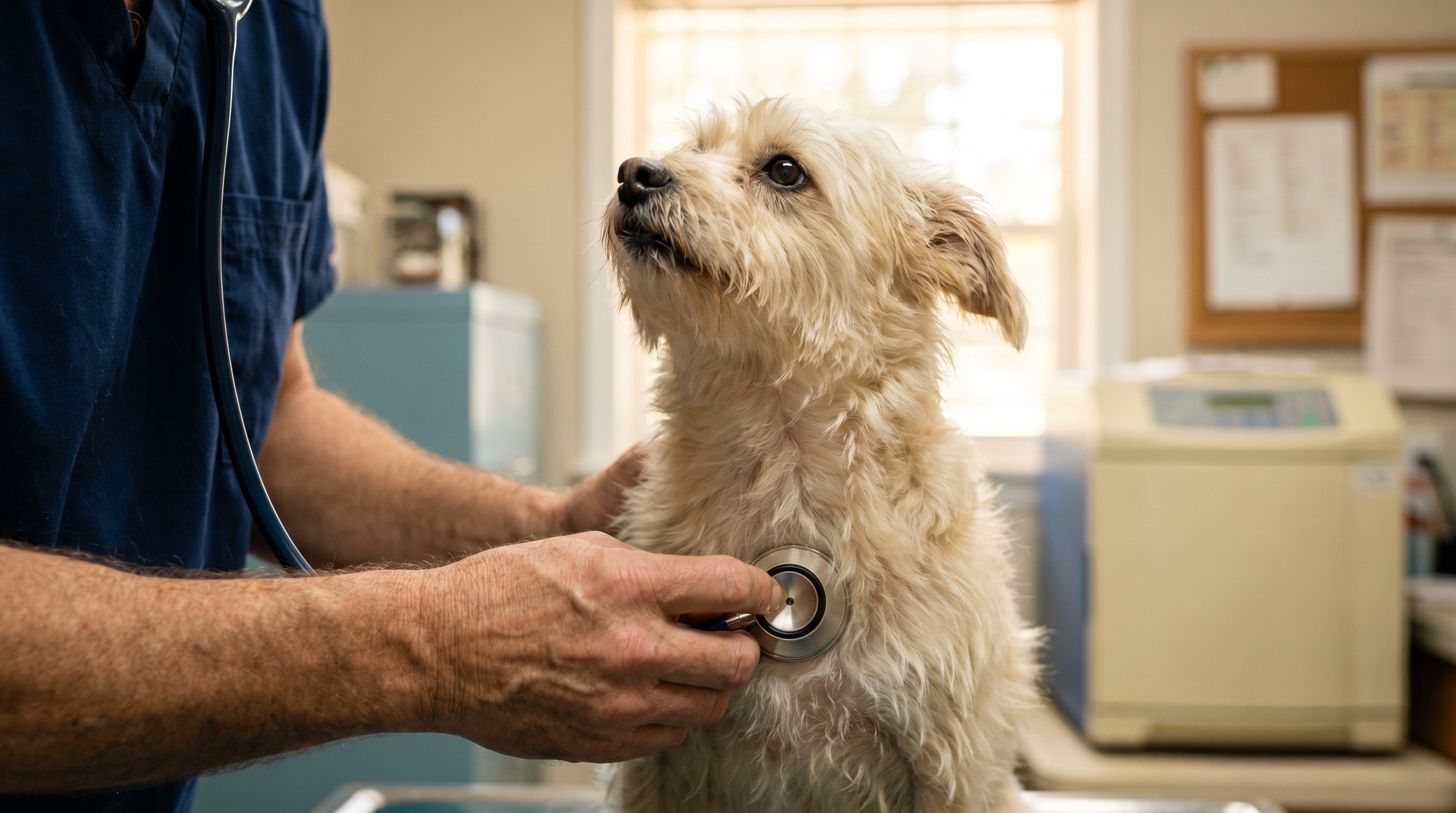
Pet Emergency Center is Fort Lauderdale's independently owned emergency veterinary hospital. For over 40 years, we have cared for dogs, cats, birds, and exotic pets during the hours when most daytime practices are closed. Our team is built for this. Every shift, every night, every weekend.
Call us. Walk in. We will take it from here.
Call (954) 772-0420If your pet is showing any of these signs, do not wait. Call us or come directly to our Fort Lauderdale hospital. We will handle the rest.
Labored breathing, rapid breathing, wheezing, gagging, or open-mouth breathing in cats. Pale, blue, or gray gums are an emergency sign. Respiratory distress can escalate quickly and needs immediate attention.
Any significant bleeding that does not stop within a few minutes, visible wounds, or injuries from being hit by a car or falling from height. Internal injuries are not always visible, which is why any trauma deserves an exam.
If your pet suddenly collapses, cannot stand, seems confused, or does not respond to you the way they normally would, come in. These are signs of serious underlying issues that need immediate evaluation.
If you think your pet ate something toxic, do not wait to see if symptoms develop. Chocolate, xylitol, human medications, grapes, onions, lilies (for cats), rodent bait, antifreeze, and many household items are dangerous. Bring the packaging if you have it.
Repeated vomiting, vomit with blood, or severe diarrhea can cause dehydration fast, especially in smaller pets. If your pet cannot keep water down or you see blood, they need care now.
A bloated, hard belly (especially in large or deep-chested dogs) paired with unsuccessful attempts to vomit can indicate GDV (bloat), a life-threatening emergency that requires immediate surgery.
A single brief seizure in a pet with a known history may not be an emergency. But a first-time seizure, repeated seizures, or a seizure lasting more than two to three minutes needs immediate evaluation.
This is an absolute emergency in male cats. Straining to urinate with nothing coming out is a urinary blockage, which can be fatal within hours. Dogs and female cats with these signs also need prompt attention.
Swollen, red, or discharging eyes, a pet holding one eye shut, bumping into things, or visible damage to the eye. Eye emergencies can progress to permanent damage quickly.
In South Florida, heatstroke is a year-round risk. Heavy panting, drooling, weakness, vomiting, or collapse after time outdoors or in a car requires immediate care. Do not wait for symptoms to worsen.
Common in South Florida. If your pet has had contact with a cane toad (Bufo toad), symptoms include drooling, pawing at the mouth, red gums, disorientation, or seizures. Rinse the mouth with running water and come in immediately.
Dog bites, cat fights, or wildlife encounters can leave deep puncture wounds that look small on the surface but damage tissue underneath. Bite wounds need professional cleaning and often antibiotics.
If your pet is in active labor and more than an hour passes between puppies or kittens, or if she is straining without delivering, come in.
Call us at (954) 772-0420. We will help you decide.
Call (954) 772-0420When you walk through our doors, our team is already thinking about your pet.
We assess every patient immediately on arrival. The most critical cases are seen first. If your pet's condition is life-threatening, they will be moved to treatment right away, even if there are other patients in the waiting area.
Before we proceed with any major treatment or testing, we walk you through an estimate. You will know what each step costs and what it covers. No hidden fees. No upselling. We Work with Families wherever we reasonably can.
We explain what is happening in plain language. You will understand the diagnosis, the options, and the plan. Ask us anything. If something does not make sense, we slow down.
If you do not have any of this, do not worry. Come in anyway. We will figure out the rest together.
Emergency medicine requires acting fast with complete information. We built our hospital to handle the full spectrum of critical care on-site, so your pet does not need to be transferred elsewhere in the middle of a crisis.
Blood work, digital radiology (X-ray), ultrasound, and other imaging, all performed on-site while you wait. We get answers quickly so we can act quickly.
Our surgical team handles wound repairs, foreign body removals, bite wound closures, emergency spays, and many other urgent procedures on-site. When a patient needs emergency surgery, we do not make them wait.
Patients who need extended observation, IV fluid therapy, oxygen support, or continuous monitoring stay with us until they are stable. Our team checks on hospitalized patients around the clock.
Effective, compassionate pain control is part of every treatment plan. Pets in pain heal slower and suffer more than they need to. We take pain seriously from the moment your pet arrives.
Your pet leaves with the medications they need, the same visit. No waiting days for a prescription to ship. Immediate access is part of emergency care, and we built our pharmacy around that reality.
Most pet owners have a relationship with a primary veterinarian, and that relationship matters. We see ourselves as a partner to your daytime vet, covering the hours and emergencies they cannot. After we treat your pet, we send records and a detailed case summary to your primary vet so they can pick up care seamlessly.
If you do not have a regular veterinarian, we can recommend practices in the Fort Lauderdale area we trust.
Our emergency team is equipped and experienced with a wide range of species. Many emergency hospitals in South Florida do not see birds, reptiles, or exotic pets. We do.
If you are reading this page trying to figure out whether your pet's symptoms warrant a trip to the ER, a $75 telehealth consultation may be the right first step. One of our veterinarians will assess your pet over video and help you decide what to do next. If you end up coming in, your $75 is credited toward the visit.
Book a Telehealth ConsultationCan't find what you're looking for? Call (954) 772-0420 or book a telehealth consultation. We're happy to help.
Call our Fort Lauderdale hospital. Walk in. Book a video consultation. Whatever path makes sense for your situation, we are ready.